


Bichi is known for its farming and its steady local trading activity, and if you trade there, you already know your income doesn’t move on a predictable monthly schedule. It shifts with the season, with market demand, and with whatever’s happening in the surrounding farming calendar. That kind of unpredictable, uneven income is exactly what the My Kolo savings plan from Queensmoni was designed to work with.
This is a detailed, practical look at how My Kolo actually works, why it fits Bichi’s trading pattern specifically, how it compares to the bigger national savings apps, and exactly what to do if you want to start using it.
Why generic savings advice misses the point here
A lot of financial advice repeats the same basic formula: pick a fixed amount, save it every month without fail, and don’t touch it. That’s reasonable enough if you’re salaried, but it assumes something that isn’t actually true for most traders in Bichi, which is that income shows up in predictable, equal amounts. It doesn’t. A strong period tied to harvest timing can bring in several times what a quiet stretch does, and there’s rarely any guarantee that next month looks anything like this one.
This mismatch explains a lot about why traders who genuinely want to build savings often end up not doing it in any structured way. Tools built around salaried, monthly income simply don’t bend to fit trading income, so people either save informally, which works to a point but doesn’t earn interest and is far too easy to dip into casually, or they don’t save in any real sense at all beyond keeping some cash aside for emergencies. My Kolo exists specifically to close that gap.
What My Kolo actually is
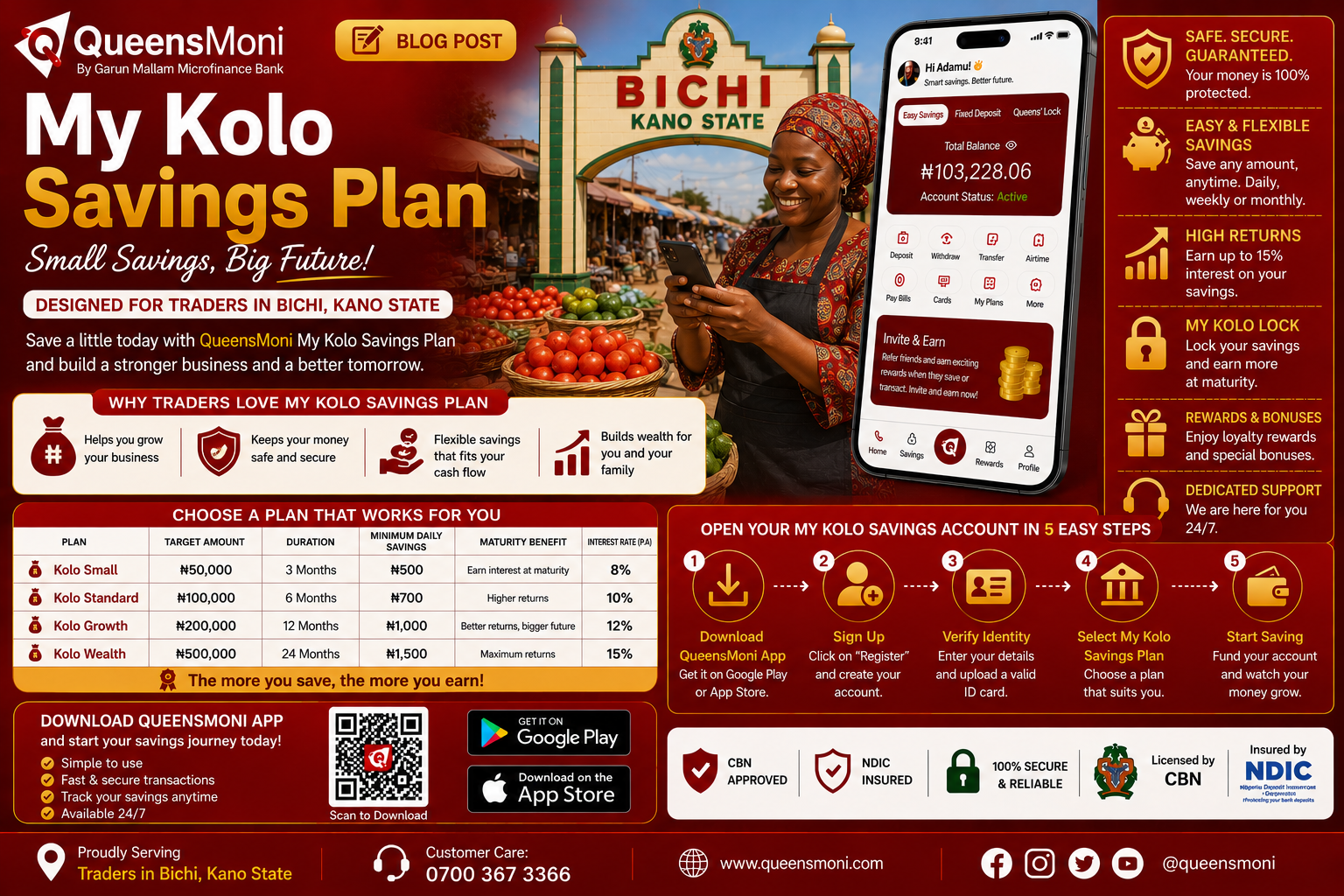
My Kolo is a structured savings product that runs on auto-debit, but unlike a lot of rigid savings tools, it doesn’t lock you into one fixed monthly figure. It’s built around smaller, more frequent contributions, the kind of pattern that fits a trader’s daily or weekly sales far more naturally than a traditional account ever could.
There are a few specifics worth understanding clearly before you start. It currently earns around 15% interest per year on your accumulated balance, a genuinely meaningful return if you stay consistent with it over time. There’s also an important condition around early withdrawal. If you take your money out before the date you originally committed to when setting up the plan, you lose 25% of the interest that had built up to that point. This isn’t a technical inconvenience; it’s a deliberate part of the design, meant to make casual, impulsive withdrawals genuinely uncomfortable so that money you’ve committed to saving actually stays saved rather than slowly leaking back out for small, unplanned expenses.
It also tends to work best when tied to something specific rather than just vague, general saving. Restocking ahead of a strong harvest-linked period, building capital to expand into a wider range of goods, or simply building a cushion to get through slower stretches- all of these give the plan a clear purpose that makes it far easier to actually stick with over months rather than weeks.
How this compares to PiggyVest and Cowrywise
If you’ve looked into savings apps before, PiggyVest and Cowrywise are names you’ve almost certainly come across, since both are heavily advertised and used by millions across Nigeria. PiggyVest is known for making automated saving simple, letting you set a target and a schedule and largely forget about it. Cowrywise leans more toward mutual funds and structured investment products, popular among salaried professionals who want their savings doing a bit more than just sitting in an account.
Both are legitimate, well-built platforms. The issue, if you’re trading in Bichi specifically, is that neither was really designed around your kind of income. They’re national products, built with a fairly generic, often salaried and urban, user in mind. Trying to force trading income into their typical monthly savings structure can work, but it often feels like fighting the tool rather than being helped by it.
My Kolo starts from the opposite assumption entirely: that income is going to be irregular, and the product should adapt to that reality rather than expecting you to adapt to it.
Getting started with My Kolo
Signing up is genuinely simple, and none of it requires a trip into central Kano. You’ve got a few options depending on what’s most convenient. You can go directly to queensmoni.com from a browser on your phone or computer. If you’re using an Android phone, the app is available for download on Google Play. And if you’re on an iPhone, you’ll find it on the Apple App Store as well.
Wherever you register, you’ll need a valid means of identification, whether a National ID, voter’s card, driver’s license, or international passport, along with your Bank Verification Number. This is a standard requirement across any regulated financial platform operating in Nigeria, not something unique to Queensmoni.
Once registered and verified, select My Kolo from the available savings products, and think carefully about a realistic deposit pattern based on your actual average income across good and bad trading periods combined, not on your single best day. Setting the bar too high early on is one of the most common reasons people quietly abandon a savings plan within the first couple of months.
Practical habits that make a real difference
A few things tend to separate traders who stick with My Kolo long enough to see meaningful growth from those who give up early.
Save right after you sell, ideally before the cash gets absorbed into daily running costs or small personal expenses. Money that sits in your pocket for even a day tends to shrink before you get around to setting any of it aside.
Base your saving target on a genuine average across your whole trading cycle, including the slower periods, rather than assuming every week will look like your best one.
Give the plan a specific purpose rather than a vague one. “I’m saving to restock ahead of the next busy period” is far easier to stay committed to than simply “I’m trying to save money.”
And treat the early withdrawal penalty as something working in your favour, not against you. It exists specifically to protect you from your own difficult weeks, the ones where dipping into savings feels tempting but would undo months of consistent progress.
Beyond My Kolo: What else is available as your savings grow?
While My Kolo is the natural starting point for most traders, Queensmoni offers a couple of other products worth knowing about once your savings grow. Queens Lock works similarly in that it’s an auto-debit savings plan, but it’s built for money you want completely out of reach until a specific, longer-term goal is met, useful if you know you need a firmer commitment than My Kolo’s structure provides.
Once you’ve built up a genuinely large balance, whether through consistent My Kolo contributions or a particularly strong trading period, moving a portion into a Fixed Deposit can make sense too. Fixed deposit rates improve with both the size of the deposit and how long you’re willing to commit it for, running from 90 days up to a full year, making it a natural next step once My Kolo has done its job of building the initial habit and balance.
Frequently asked questions from traders in Bichi
What exactly is the My Kolo savings plan?
It’s a flexible, auto-debit savings product from Queensmoni, earning roughly 15% interest annually, specifically designed for people who save smaller amounts frequently rather than one large fixed sum every month.
What happens if I need to withdraw before my agreed date?
You’re able to withdraw the money, but you’ll forfeit 25% of the interest that had built up to that point. It’s a real cost rather than a strict block, meant to discourage casual, impulsive withdrawals while still leaving the money accessible if you genuinely need it.
I don’t have a fixed income as a trader. Does this actually work for me?
Yes, that’s precisely the situation My Kolo was built for. Rather than demanding a fixed monthly amount, it’s designed around flexible, irregular deposits that fit trading income far more naturally than a traditional savings account would.
Is Queensmoni available on iPhone or only Android?
It’s available on both. You’ll find it on the Apple App Store as well as on Google Play.
How is My Kolo different from Queens Lock?
Both run on auto-debit, but My Kolo is more flexible around deposit amounts and timing, while Queens Lock is built for a firmer, more committed savings goal you don’t intend to touch until it’s reached.
Is my money actually safe if I save through Queensmoni?
Queensmoni is backed by a licensed microfinance bank, which covers the regulatory side of things. As with any financial platform, it’s worth confirming current licensing details directly before committing a significant amount of money.
The bottom line for Bichi’s trading community
If saving has never quite stuck for you as a trader in Bichi, there’s a good chance the problem was never really discipline; it was that the available tools simply weren’t built for how your income actually arrives. My Kolo starts from a completely different assumption: that your money comes in unevenly, tied to the surrounding farming calendar, and builds the entire product around that reality rather than expecting you to force your income into a shape it was never going to take.
Ready to give it a try? Visit Queensmoni, or download the app on Google Play or the Apple App Store and start your My Kolo savings plan today.